
Hair Knowledge
Bulk Human Hair for Braiding: A Salon & Wholesale Buyer’s Guide
Jul
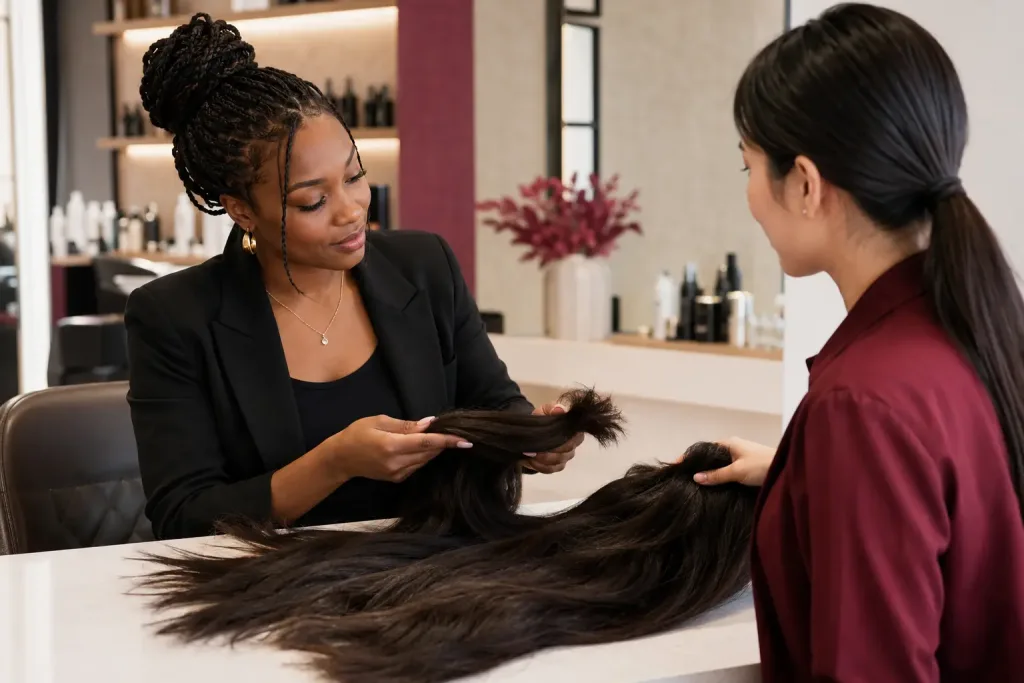
Bulk human hair gives professional braiders more control over placement, movement and the final shape of a style. It can be divided into custom sections, blended into braids, used for loose boho pieces or prepared for specialist extension techniques. That flexibility is also why buying it requires more care than simply choosing a color and length.
For a salon or hair business, the right decision starts with the service you intend to offer. Texture, processing history, usable density, strand length and consistency between batches can all affect installation time and the finished result. This guide explains how to evaluate bulk human hair for braiding before you place a wholesale order.
Menu
- What is bulk human hair?
- Bulk hair vs. weft hair: which format do you need?
- Which braiding styles can use human bulk hair?
- How to choose bulk human hair for braiding
- How to inspect a bulk-hair sample
- A practical wholesale ordering workflow
- Salon preparation and client care
- Common wholesale buying mistakes
- Bulk human hair buying checklist
- Explore Anvi Hair bulk hair
- Frequently asked questions
- Request the right specification for your salon
- Sources
- About the author
- Related resources
- Explore wholesale hair categories
What is bulk human hair?
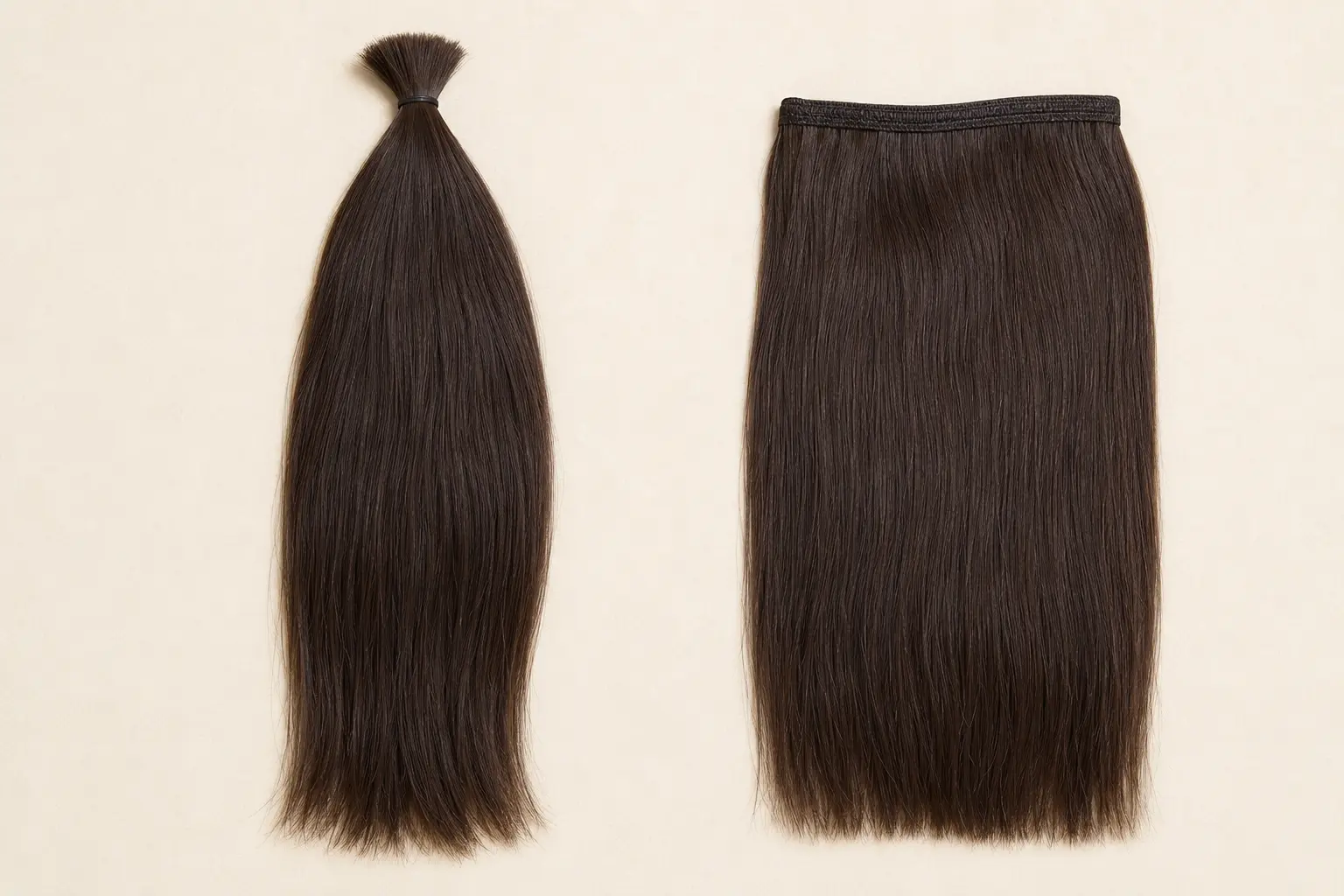
Bulk hair is loose hair that is not attached to a sewn weft, tape, clip or keratin bond. The strands are secured together for handling and shipping, but the hair itself remains free for a stylist to separate and install according to the chosen technique.
This construction makes bulk hair useful for:
- boho and goddess braid accents;
- knotless and box-braid details;
- micro braids and selected crochet methods;
- custom loc extensions;
- ventilating, wig making and other specialist work;
- services that require the stylist to control each section of added hair.
The word “bulk” describes the format, not a universal quality grade. Two bulk-hair samples can differ substantially in source, cuticle condition, processing, texture, density and performance. A buyer should therefore compare exact specifications and samples rather than relying on a product name alone.
Bulk hair vs. weft hair: which format do you need?
Bulk hair and weft hair can be made from human hair, but they are prepared for different installation methods.
| Feature | Bulk human hair | Weft hair |
|---|---|---|
| Construction | Loose, unwefted strands | Hair sewn onto a continuous track |
| Stylist control | Can be separated into custom sections | Installed in rows or tracks |
| Common uses | Braids, locs, crochet details, ventilation and custom work | Sew-ins, weave installations and some wig construction |
| Preparation | Often requires sectioning and organizing before installation | Track can be measured, cut and sewn |
| Main buying question | Does the loose hair suit the intended braid technique? | Does the weft construction suit the installation method? |
Choose bulk hair when the service requires individual loose strands. Choose a weft when the stylist needs a stable track for a sew-in or weave. If your business offers both services, keep the specifications and inventory separate so staff do not treat the two formats as interchangeable.
You can compare Anvi Hair’s bulk hair collection with its weave hair collection before preparing an enquiry.
Which braiding styles can use human bulk hair?
The answer depends on the stylist’s technique and the look requested by the client.
Boho and goddess braids
Loose human-hair pieces can be added along selected braids to create soft curls or waves. For this service, the curl pattern, tendency to tangle and behavior after washing matter as much as the initial appearance.
Knotless and box-braid details
Bulk hair can be fed into a braid in controlled sections. The stylist should test how easily the sample separates, whether the ends catch during installation and whether the chosen weight feels appropriate for the client.
Micro braids
Smaller sections demand consistency and careful preparation. A sample installation helps the salon estimate labor time and determine whether the hair can be divided without excessive tangling or waste.
Crochet and custom loc work
Some stylists use loose human hair for selected crochet or loc techniques. The product must match the method; not every loose texture will behave the same way when looped, wrapped or blended.
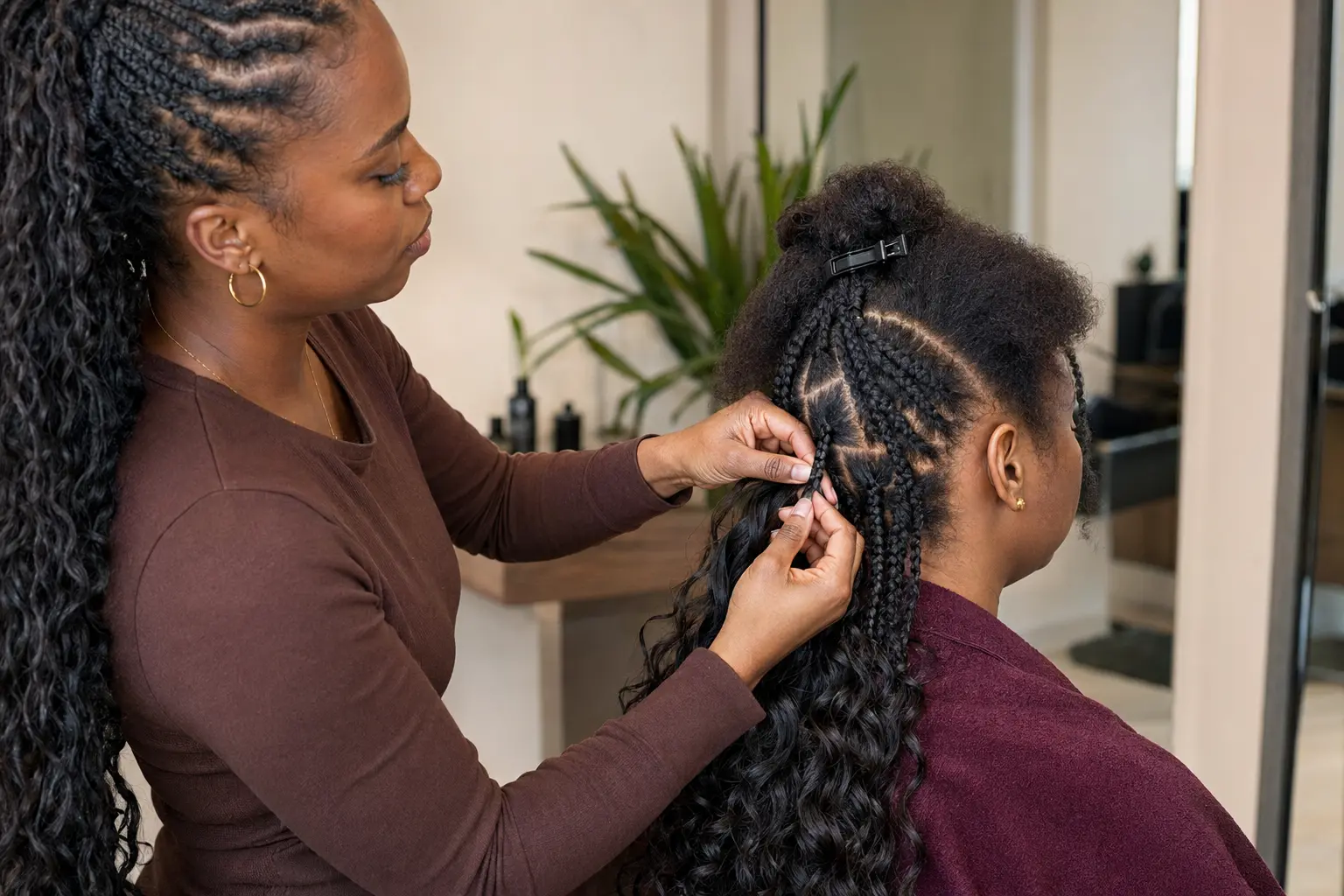
The installation should not require painful tension. The American Academy of Dermatology warns that repeatedly wearing tight braids, weaves or extensions can contribute to traction alopecia. Clients should tell the stylist if an installation hurts, and a professional should adjust any section that feels too tight.
How to choose bulk human hair for braiding
1. Start with the service, not the catalog photo
Write down the exact service before asking for a quotation:
- braid style or extension technique;
- finished length;
- straight, wavy or curly result;
- natural or colored appearance;
- desired fullness;
- whether the hair may be washed, heat styled or colored;
- target client and price level.
This prevents a common purchasing mistake: ordering attractive hair that does not suit the salon’s technique.
2. Match the texture to the finished look
Straight bulk hair may suit sleek braiding details, custom bonds and services that require the stylist to create the final texture. Wavy or curly bulk hair can reduce styling work for boho pieces, but the curl should be evaluated both dry and after an appropriate wash test.
When reviewing a sample, ask:
- Is the texture natural, steam processed or chemically processed?
- Is the pattern consistent from the top to the ends?
- Does it return after washing and air drying?
- Does the texture blend with the client’s natural hair or the main braiding hair?
- How much maintenance will the finished style require?
Do not judge a curl only while it is freshly styled for a photo. Test its behavior under the same conditions your client will experience.
3. Confirm how length is measured
Straight, wavy and curly hair can appear to have different lengths even when the strands measure the same when extended. Ask the supplier how the listed length is measured, then measure the sample using the same method.
Also inspect the full shape of the bundle. A label may state the longest strand, while the visual fullness depends on how many strands reach the lower part of the hair. Avoid assuming that terms such as single drawn, double drawn or premium drawn mean exactly the same thing across every supplier. Request a physical sample or a clear density specification.
4. Evaluate usable density, not just package weight
Package weight alone does not tell you how full a finished braid service will look. Short strands, uneven ends, tangling during separation and cutting waste can reduce the amount of usable hair.
For a trial:
- Weigh or record the starting sample.
- Prepare it as your stylist normally would.
- Install a defined number of braids or one test section.
- Record unused hair and preparation waste.
- Photograph the finished density.
- Use the result to estimate a full service.
There is no single correct quantity for every head. Braid size, finished length, spacing, client density, technique and desired fullness all change the amount required.
5. Ask for the processing history
“Human hair,” “Remy,” “virgin” and “raw” are often used differently in the market. Instead of buying from the label alone, ask operational questions:
- Has the hair been colored?
- Has the texture been altered?
- Has the hair received a coating?
- Are the cuticles present and aligned?
- Is the sample representative of the production order?
- Can the supplier keep the same specification for repeat orders?
If your service includes coloring or heat, test a small hidden section first. Previous processing can change how the hair responds, and results should not be assumed from the source name or grade label.
6. Choose color by physical comparison
Color numbers and screen photos can vary by supplier, lighting and device. Request daylight images or a physical color sample when an exact match matters. Compare the top, mid-lengths and ends, because a bundle can contain natural tonal variation.
For a custom-color service, perform a strand test and document the formula, timing and result. Never promise a bleaching outcome to a client before the actual sample has been tested.
How to inspect a bulk-hair sample
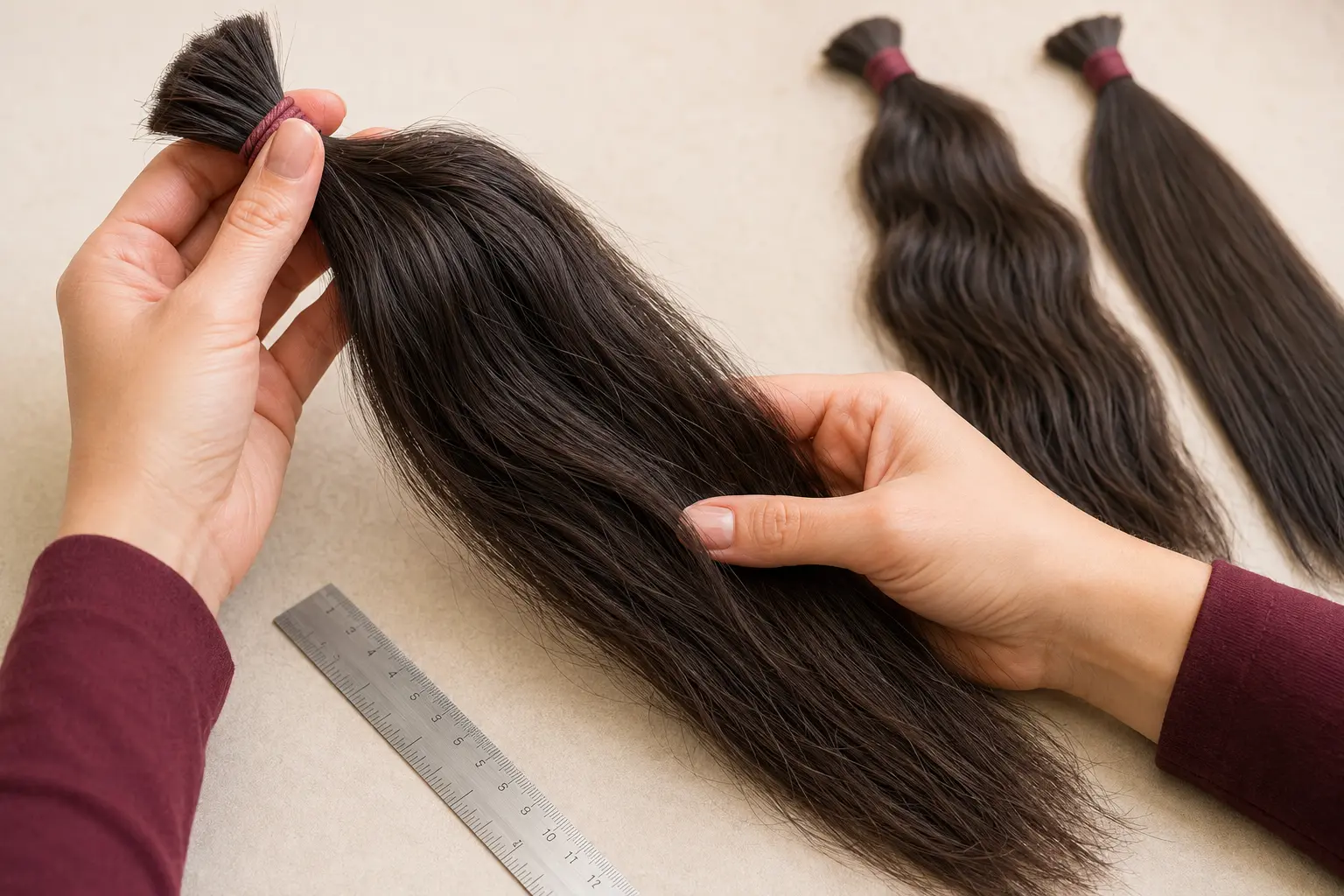
A useful sample test should reproduce the salon’s real workflow, not just assess how the hair feels when first opened.
| Check | What to observe | What to record |
|---|---|---|
| Visual inspection | Color consistency, visible short hairs, top construction and condition of ends | Photos in neutral light |
| Finger-comb test | Snagging, tangling and loose strands | Number of passes and visible shedding |
| Separation test | Ease of dividing the hair into installation-size sections | Preparation time and waste |
| Wash test | Texture, tangling and feel after drying | Products, water temperature and drying method |
| Technique test | Grip, blending, movement and finished appearance | Stylist notes and installation time |
| Strand test | Response to planned color or heat service | Formula, temperature, timing and result |
A small amount of loose hair during handling does not automatically identify the cause. Record the same test for each supplier and compare samples under consistent conditions.
A practical wholesale ordering workflow
Step 1: Send a written specification
Your enquiry should include:
- product format: loose bulk human hair;
- intended braiding or extension method;
- texture;
- color;
- length and how it should be measured;
- required density or drawn specification;
- estimated quantity;
- destination country;
- packaging or private-label requirements, if any.
Written specifications reduce misunderstandings and make quotations easier to compare.
Step 2: Order a representative sample
Ask whether the sample uses the same specification and processing as the future production order. Test it with the stylist who will deliver the service, not only with the purchasing team.
Step 3: Create a salon test record
Keep the supplier name, sample code, photos, test date, stylist feedback and client-service outcome together. If you reorder, reference the approved sample rather than describing it from memory.
Step 4: Confirm the production details
Before payment, confirm the final specification, quantity, current price, production status, delivery method and applicable policies directly with the supplier. These details can change and should not be inferred from an older catalog or social post.
Step 5: Inspect the received order
Compare the shipment with the approved sample before distributing it across locations or using it for multiple clients. If there is a difference, document it immediately with clear photos and batch information.
For a wider view of sourcing from Vietnam, read Anvi Hair’s Vietnamese hair extensions wholesale buyer guide.
Salon preparation and client care
Good hair can still perform poorly if it is installed or maintained incorrectly.
- Detangle and organize the hair into workable sections before the appointment.
- Follow the supplier’s instructions before washing or applying products.
- Use a strand test before color, bleach or unfamiliar heat settings.
- Keep the added hair light enough for the client and avoid painful tension.
- Explain nighttime protection, gentle detangling and moisture needs for loose boho pieces.
- Ask the client to report persistent pain, bumps, irritation or unusual hair loss.
- Recommend professional removal when the technique could damage the natural hair if cut or pulled incorrectly.
The service plan should account for maintenance. Loose human-hair curls may offer natural movement, but they usually need more detangling and care than a fixed synthetic texture.
Common wholesale buying mistakes
Buying by grade name alone
Grade labels are not a substitute for a specification and sample. Compare measurable characteristics and actual service performance.
Comparing different products only by price
A straight natural-color sample and a processed curly color may have different costs and labor requirements. Compare like with like.
Skipping the stylist test
Purchasing staff may like the look and feel of a sample, while the braider finds it slow to separate or difficult to control. Both evaluations matter.
Promising color results before testing
Human hair can have different processing histories. A strand test is the safest basis for a client promise.
Scaling too quickly
Start with a controlled order, track salon results and reorder from an approved specification. Consistency is more valuable than a one-time attractive sample.
Bulk human hair buying checklist
Before approving a supplier or product, confirm that you can answer these questions:
- What exact service will use the hair?
- Is the hair truly loose and unwefted?
- What texture and processing history does it have?
- How is the length measured?
- How full are the mid-lengths and ends?
- How easily can the stylist separate it?
- What happens after washing and air drying?
- Has the planned color or heat process been tested?
- Is the sample representative of the production order?
- Are current price, quantity, delivery and policies confirmed in writing?
Explore Anvi Hair bulk hair
Anvi Hair’s bulk hair collection includes options across different colors, textures and lengths. Because availability and business requirements vary, send the team your intended use, exact specification, estimated quantity and destination for a current recommendation and quotation.
Frequently asked questions
Is bulk hair the same as weft hair?
No. Bulk hair consists of loose, unwefted strands that a stylist can divide for braiding and custom techniques. Weft hair is attached to a sewn track and is commonly used for sew-ins and weave installations.
Can bulk human hair be used for boho braids?
Yes, loose human hair can be used for boho or goddess-braid pieces when the texture and preparation suit the stylist’s technique. Test the curl after washing and evaluate tangling, maintenance and blending before buying in volume.
How much bulk human hair is needed for a full head?
There is no universal amount. The required quantity depends on braid size, spacing, finished length, client density, technique and desired fullness. A stylist should complete a controlled test section and use the result to estimate the full service.
Can bulk human hair be bleached or colored?
Possibly, but the result depends on the hair’s previous processing and current condition. Ask for the processing history and perform a strand test before treating the full sample or promising a result.
What should a wholesale buyer test first?
Start with visual condition, separation, tangling, shedding during a consistent finger-comb test, wash behavior and performance in the exact salon technique. If the service includes heat or color, add a controlled strand test.
Request the right specification for your salon
Browse the Anvi Hair bulk hair collection, then contact Anvi Hair with your required texture, color, length, estimated quantity, intended technique and destination. The clearer your specification, the easier it is to identify a suitable option for testing.
Sources
- Anvi Hair — Bulk Hair collection
- Anvi Hair — Weave Hair collection
- American Academy of Dermatology — Hairstyles that pull can lead to hair loss
- American Academy of Dermatology — How to prevent hair damage from a weave or extensions

Explore wholesale hair categories
